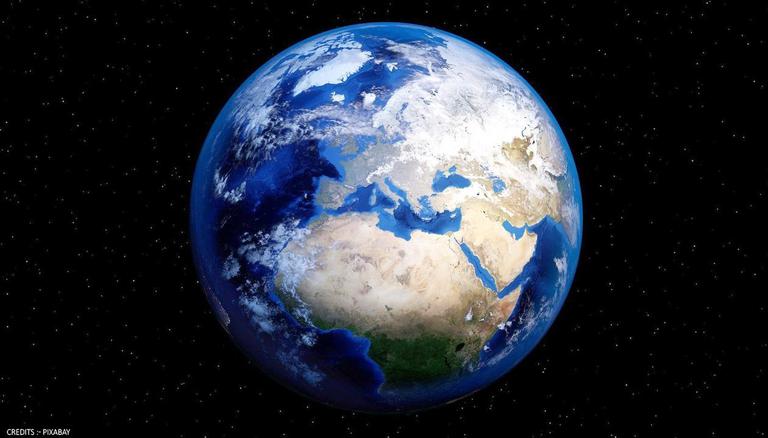
Scientists from NASA and NOAA in the United States have discovered that the energy imbalance of the Earth has approximately doubled in the 14 years from 2005 to 2019.
The amount of heat stored by the earth has doubled in just 14 years. Scientists from NASA and the National Oceanic and Atmospheric Administration (NOAA) found that the energy imbalance of the Earth approximately doubled in the 14 years from 2005 to 2019.
The balance between the solar radiation energy absorbed by the atmosphere and the earth’s surface and the amount of thermal infrared radiation emitted by the earth into space determines the earth’s climate. In this study, the scientists compared the data with two separate measurements, including NASA’s clouds and Earth’s radiation. Energy System (CERES) and data from a global series of ocean buoys called Argo, which can accurately estimate the rate of global ocean warming. Norman Loeb, the lead research author and lead researcher of CERES at NASA’s Langley Research Center in Hampton, Virginia, said that these two separate forms helped them discover changes in the energy imbalance of the Earth.
• “Two very independent views on the changes in the energy imbalance of the earth are the same. Both show this very large trend and make us very convinced that what we are seeing is a real phenomenon, not just An instrumental artifact.” Norman Loeb said. “The trends we found were shocking in some ways,” Loeb said in a NASA press release
Scientists have discovered that due to human activities, increased emissions of greenhouse gases such as carbon dioxide and methane will store heat in the atmosphere. Warming can lead to other changes, such as melting ice and snow, increased water vapor, and cloud changes that may improve further. The researchers also found that the transition from cold to warm Pacific Interdecadal Oscillation (PDO) may have played a role in exacerbating the energy imbalance. Scientists warn that this study is only a “long-term relative” snapshot of “climate change” that they cannot predict with certainty. However, the study concluded that if the heat absorption rate does not decrease, a higher heat absorption rate can be expected. climate change..
- Comment
-
Subscribe
Subscribed
Have a WordPress.com account? Log in now.

